Craft · August 2026 · 5 min read
Choosing Our Materials
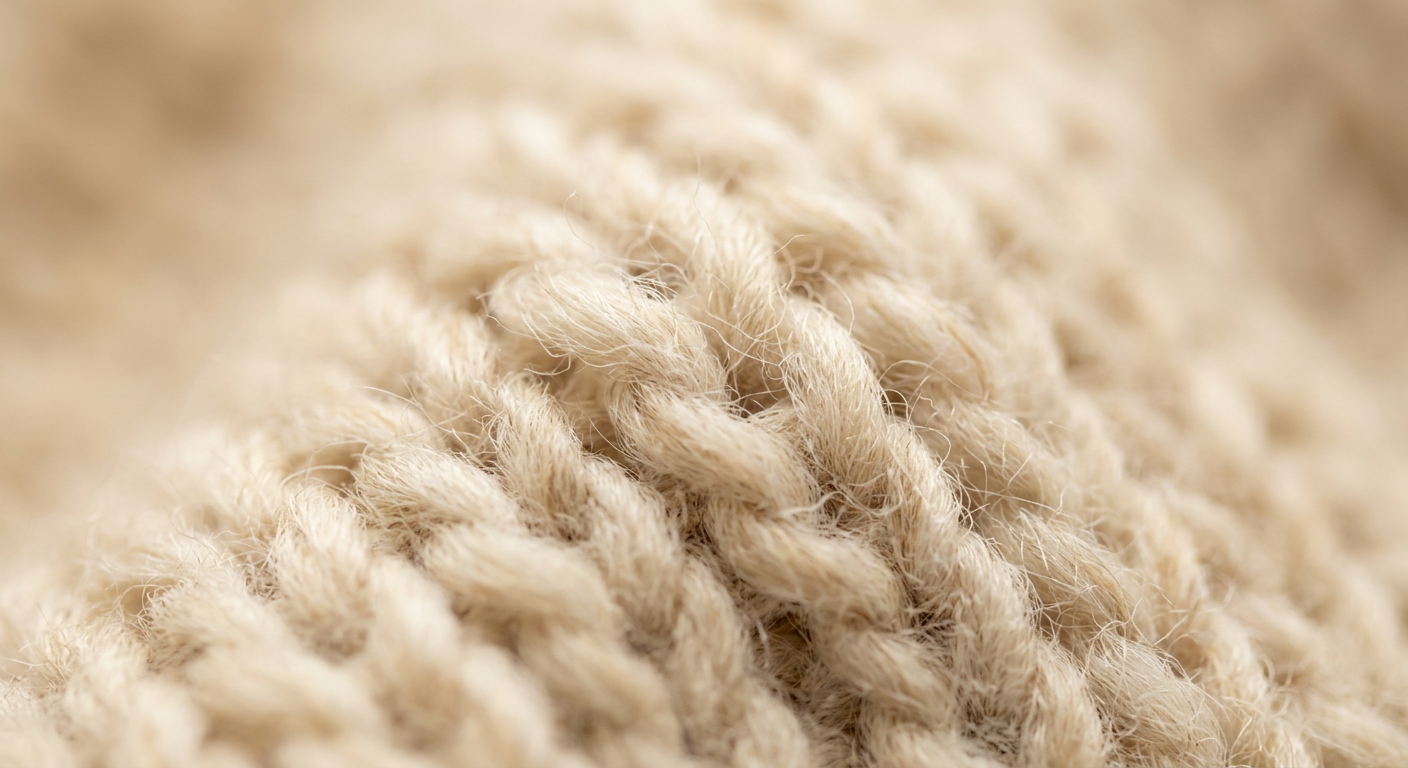
The materials we knit with sit closest to the most delicate skin there is. A newborn spends their earliest weeks wrapped, held and layered, and whatever touches them in those weeks should be chosen with real care. That responsibility guides every material decision we make.
When we assess a yarn, we look for softness first. Not the softness you notice for a moment in a shop, but the kind that survives a wash and a week of wear — a hand that stays gentle against the neck, the wrists and the belly, where a baby is most sensitive. A yarn that feels beautiful new but turns scratchy after washing has failed the only test that matters.
Then we look for resilience. A baby garment lives a hard life. It is worn, dribbled on, washed often, and frequently handed down to a younger sibling or a friend’s child. A material has to hold its shape, keep its colour and resist pilling through all of that. We would rather knit with a yarn that ages gracefully than one that looks perfect for a fortnight and tired by the end of the season.
Weight and breathability matter just as much. Babies regulate their temperature poorly, so a good knit has to keep warmth in without overheating — substantial enough for a winter layer, breathable enough to wear indoors. We test how a yarn behaves once it is knitted up, not just how it feels on the cone, because a fibre can change character entirely once it is worked into stitches.
We pay close attention to how a material takes colour, too. The quiet, muted tones that run through our collection — natural cream, soft rose, warm oatmeal — depend on yarns that hold colour softly rather than brightly. Where we can, we favour natural and undyed tones, and flecked colours that carry a little depth rather than a flat, uniform finish.
We are still refining and confirming the full detail of our fibre compositions and their traceability. Rather than make claims we cannot yet stand behind, we would prefer to say plainly that this work is ongoing. As each piece is finalised, we will publish its full composition here and on the product page, so you can know exactly what is against your child’s skin.
Choosing materials slowly, like knitting slowly, means we make fewer things and make them more carefully. It is not the fastest way to build a collection. But when the material is the one part of a garment a baby actually feels, we think it is the only way worth doing.